


Modern ministries manage correspondence across multiple departments, languages, and approval layers - incoming requests, outgoing official communications, internal routing, ministerial sign-offs, and bilateral exchanges. At scale, this is one of the most process-intensive administrative functions in government.
When correspondence runs across disconnected email inboxes, shared drives, and departmental workarounds, the consequences are well-documented: routing delays, inconsistent handling procedures, no structured accountability mechanism, and limited visibility into response times or backlog levels. Demonstrating audit readiness becomes a manual effort rather than a natural output of daily work.
Bilingual processing requirements add further operational load. When translation and formatting are handled manually, turnaround times increase and error risk rises, placing unnecessary pressure on caseworkers who are already managing high volumes.
The underlying issue is structural. A correspondence function built on individual discipline rather than systematic process cannot scale, cannot self-audit, and cannot adapt quickly when volumes or requirements change. What is needed is not a faster version of the current approach, it is a different architecture entirely.



F2 is purpose-built for the way government ministries actually work. It is not a generic document management tool adapted for the public sector, it is a platform where auditability, structured approvals, records archiving, and access control are core functionality, not add-ons. This distinction matters. When compliance is embedded in the workflow rather than bolted on afterwards, staff follow the right process by default and audit readiness is the natural result.
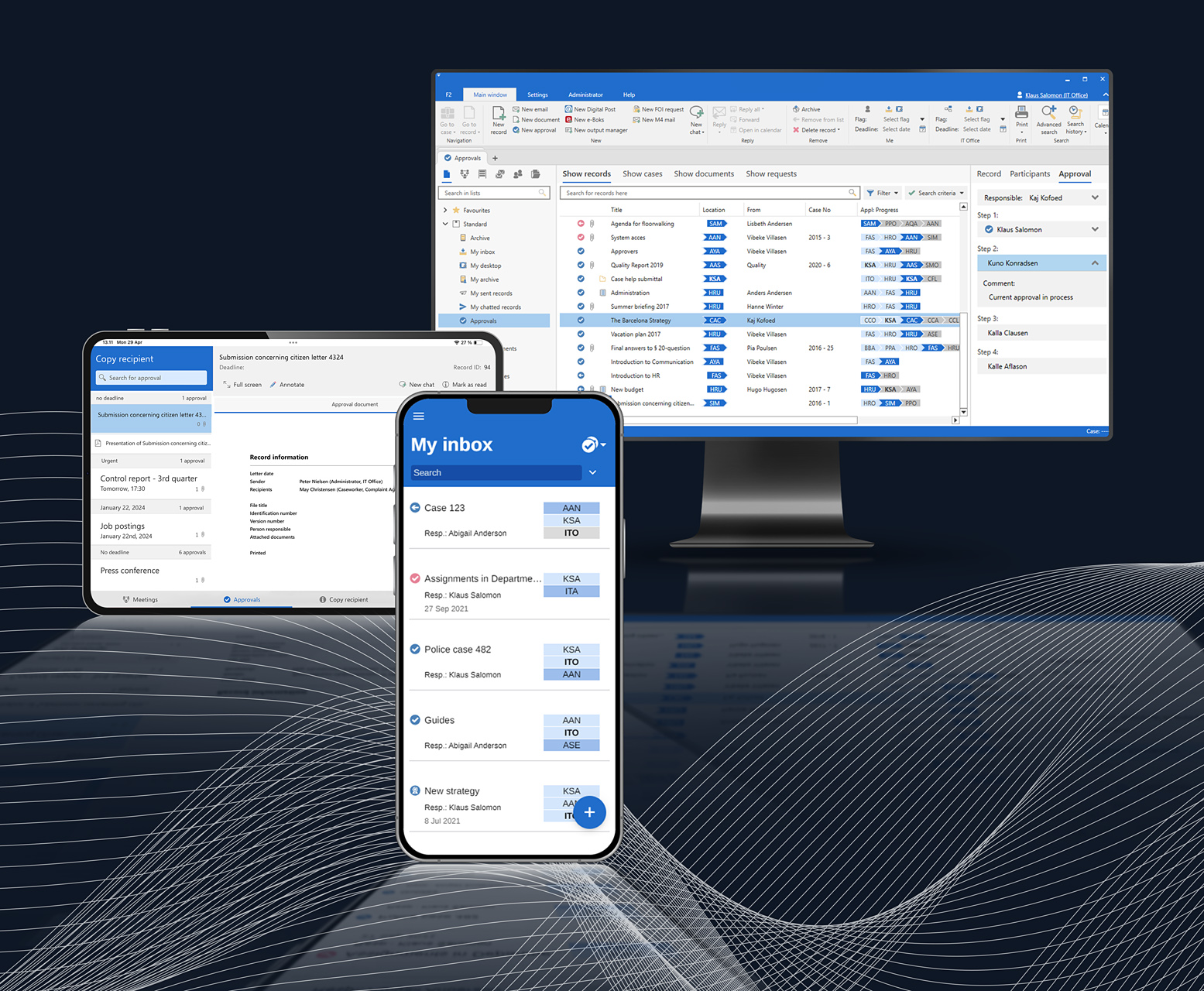
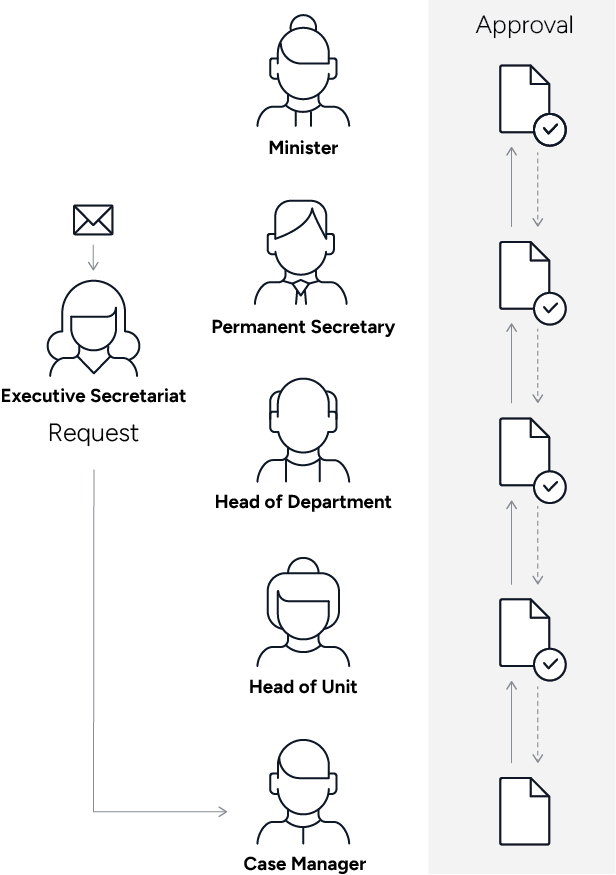
F2 manages the complete correspondence lifecycle in a single platform. Incoming communications are registered, classified, and routed through configurable workflows. Outgoing correspondence moves through structured drafting, review, and approval chains. Internal communications are tracked with full cross-department visibility and performance monitoring - response times, backlog levels, and escalation flags are available in real time. Every action, every document, every decision is stored in a centralized, access-controlled archive with a complete and immutable audit trail.
F2's AI capabilities are integrated directly into the platform, not layered on top. The AI Assistant supports caseworkers with drafting, classification, and prioritization. The AI Task Specialist automates repetitive steps within configurable workflows, reducing manual handling without removing human oversight or accountability. Critically, all AI processing runs fully within the government environment. No data leaves the ministry's controlled digital platform. This is responsible, sovereign AI - by design, not by configuration choice.
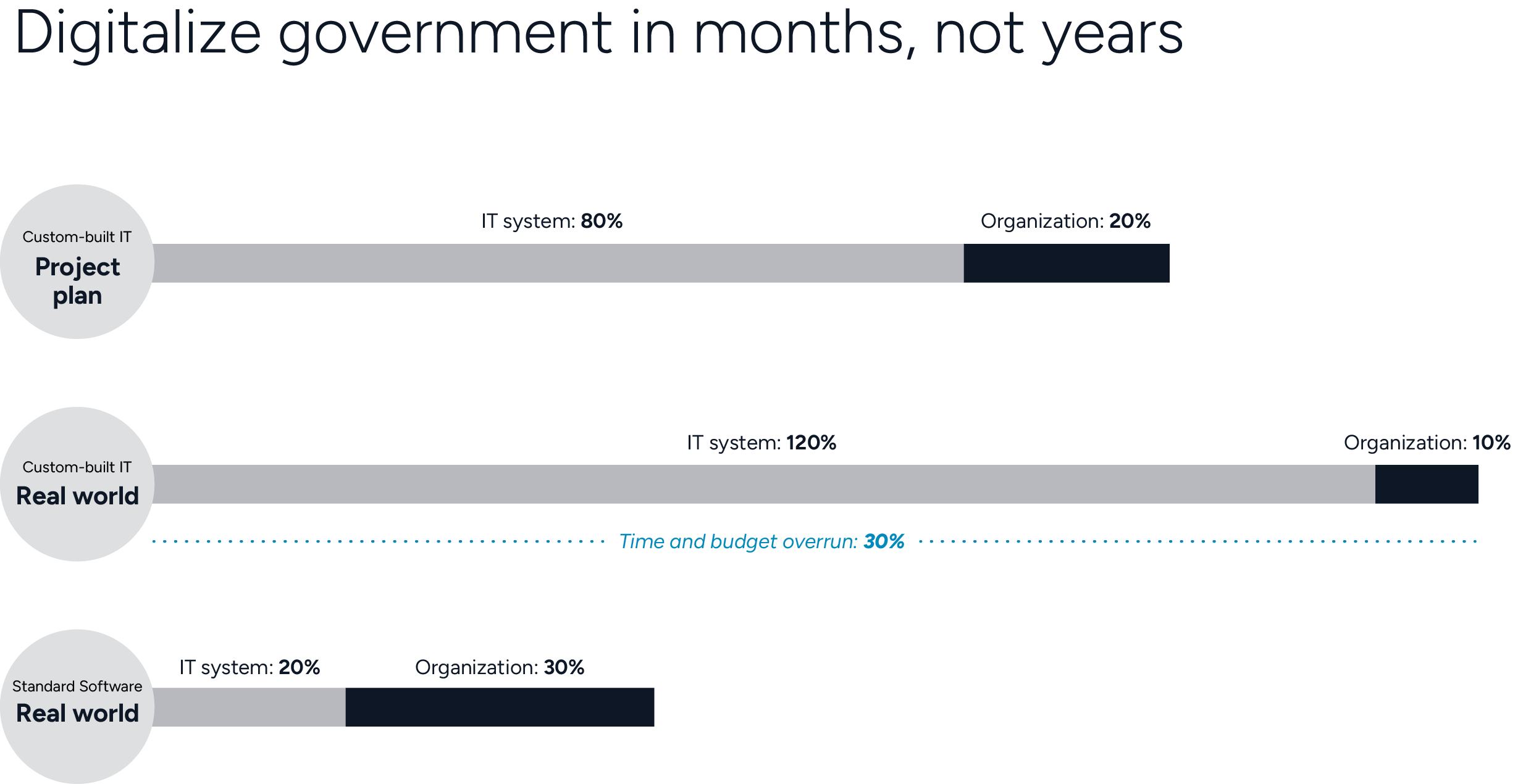
F2 is already used by the Danish Ministry of Education and by multiple education-sector agencies managing large-scale student and administrative case volumes. It is also live within UAE government. The platform has demonstrated the ability to scale to very large numbers of users and transactions, and government organizations using F2 have processed 70% more cases without additional staff. New ministries go live in as little as three weeks.